
I’m going through some of my old papers from high school, and I’m sharing them here unedited because I want to have a journal on here sharing my progress as I find them.
This is the first one I found.
AP Lang- Period 1
30 October 2014
Drowning in Woolf’s Past: Timed Writing
Language and word choice determine whether or not readers are able to experience memories with the writer, or simply hear of them. Virginia Woolf, an extremely talented writer, knew how to use language in a way that allowed for any and all people to live alongside her in her past, specifically her summers spent during her childhood. She was more than capable of enhancing these experiences by adding copious amounts of details to them. Woolf’s ability to speak through her stream of conscience and her use of vivid metaphors only contributes to these enhancements, as well.
Woolf’s use of language enriches the significance of her memories by repeating and going in depth over minute details. Her talent to describe even the most average of characteristics makes it unforced to visualize the summers she spent as young and vulnerable girl. For example, Woolf tells the readers that her brother, Thoby’s eyes were not just blue eyes but they were “blue eyes very blue.” Woolf also spends more than a few sentences remembering her “passion” for fishing and her father’s unapologetic attitude against the sport. She intertwines her father and herself effortlessly by using these thrilling words that contrast, yet combine their views. It is her attention to specifics such as this one that makes it clear she is not just glancing over her summer; Woolf is remembering the lasting impact her family made on her.
Woolf uses her stream of conscience to leave her memories lingering on readers’ minds. She does not always follow a strict type of language style. She uses analogies followed by a “but” that does not flow the way one would necessarily believe it to be. She asks questions directed towards herself as if she is completely baffled about the specific topics, but follows the questions with extraordinarily accurate answers to them, too. Through her back-and-forth style of language that mimics her thought process, one is able to understand the impact her childhood has left on Woolf.
A large part of Woolf’s childhood is relayed through a metaphor: a single seed. Woolf compares her passion for fishing with a seed. She speaks of her love for fishing as a love for “the thrill and the tug”, meaning she enjoyed the unexpected moments fishing brought to her. This is similar to a seed because seeds grow into such new creations than they were previously thought to be. Woolf continues the metaphor by adding that every person has a seed that will take a unique growth route than another’s seed. Woolf’s metaphor finalizes the message that her one summer spent fishing with her brother and father changed her forever.
Overall, Woolf’s ability to use language in a smorgasbord of ways makes it so apparent that the one day in the one summer in her one childhood renovated everything she thought and valued. Her richly contrasting wording through her attention to details, her stream of conscience, and her enduring metaphor are what is able to fully serve that purpose.
So that’s that. And then this just came up on my tiktok, and it’s making me think in relation to this essay.
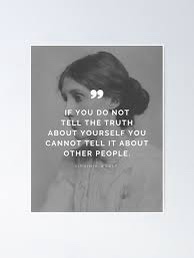
 Considering It Pure Joy...