Wit’s End Symphony: Minds Unveiled

In the enchanting realm where thoughts took flight, picture a narrative unfolding—an epic tale of Minds Unveiled. As the sun dipped below the horizon, societal twilight, like a fleeting mist, attempted to cloak the brilliance of these bold and bright minds. Yet, it couldn’t quell their might, for within the dance of freedom, a compelling story emerged, reaching towering heights.

Imagine a caged bird’s song, a call so resilient that it echoed through the corridors of time. Maya’s triumph, breaking through the thrall, reverberated like the triumphant crescendo in a symphony. In the echoes of her melody, Mary embarked on a courageous journey, leaving an indelible mark—a trailblazer’s path adorned with the vibrant hues of displayed courage.

Grunya, with a gaze as pioneering as the first light of dawn, illuminated minds in the gentle night. Her profound observations became the brushstrokes on the canvas of diversity, a celebration echoing across the expanse of thought.

Each mind, a chapter waiting to be unfurled, played a note in the grand symphony within the playground of ideas. Taylor Swift’s words, a comforting rhyme, became the guiding thread, weaving through the passage of time, uniting these tales in a harmonious chorus.

Trials faced and choices made became the rising crescendo, a symphony of resilience where courage flowed like a river. Melanie’s wisdom echoed through the ages—a cherished poster, weathered by time but eternally relevant. “You never fail until you stop trying.” This mantra adorned the mindscape, a beacon urging these tales to keep striving, to persist through changing paths, and to never surrender the pursuit of their dreams.

Picture them navigating stars, breaking through the tapestry of the night—a shared lore, a collective might, a story told with the finesse of a gifted storyteller, infused with the eternal wisdom to never cease trying.
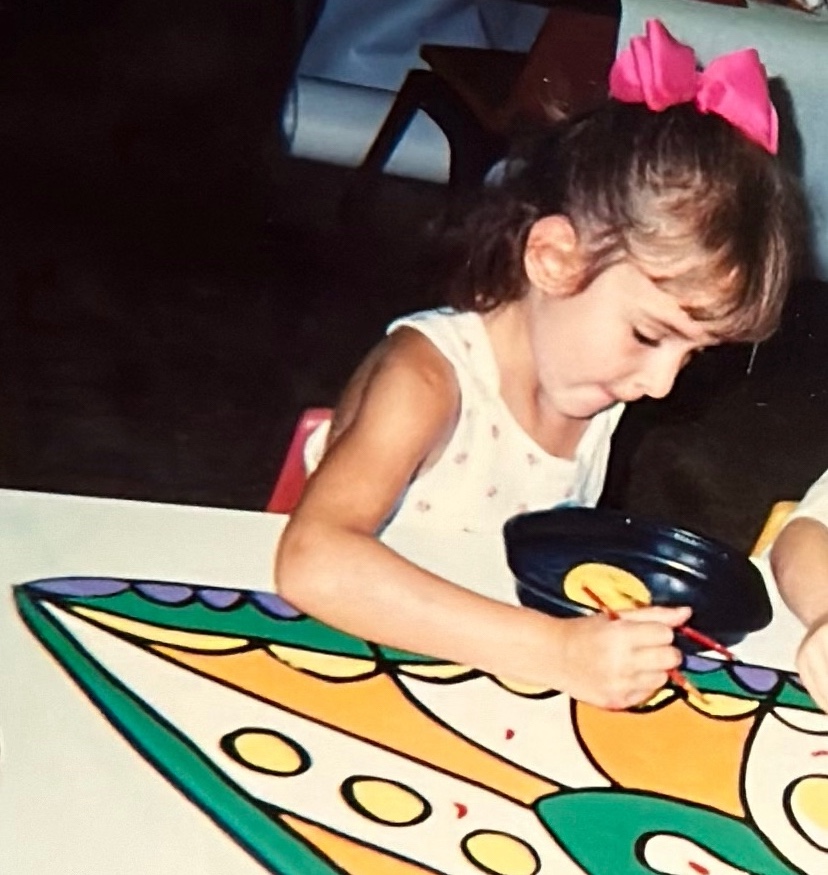
My Kindergarten Book Publishing Party

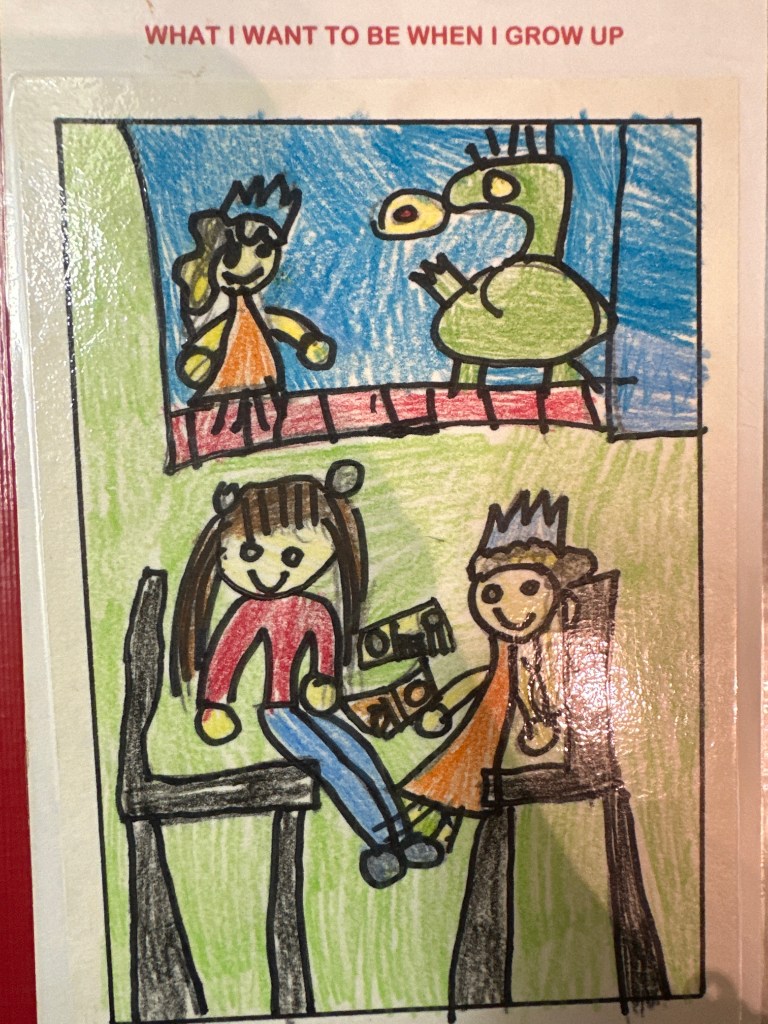
Surrounded by a cacophony of adult voices during the kindergarten book publishing celebration, my book about dreams remained tucked away in obscurity. It seemed the world had more pressing matters to discuss that day. However, during the editing process, my English teacher, the embodiment of properness, took a moment to acknowledge my dedication, which hadn’t been to myself. Her worldly knowledge, including the fine art of beans on toast, left an impression, despite my aversion to the bean’s texture and her occasional soggy toast. Her words etched into my young mind the enduring kindness of dedicating one’s dreams to others.

It would take exactly twenty years since then for me to understand the paradox that in doing so, I would have to be unkind to myself.

I wanted to be a portrait painter and artist. I still do.

Drowning in Woolf’s Past: Timed Writing c. 2014

I’m going through some of my old papers from high school, and I’m sharing them here unedited because I want to have a journal on here sharing my progress as I find them.

This is the first one I found.

AP Lang- Period 1

30 October 2014

Drowning in Woolf’s Past: Timed Writing 

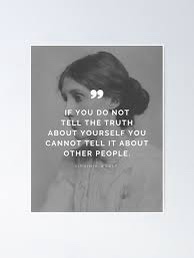
Language and word choice determine whether or not readers are able to experience memories with the writer, or simply hear of them. Virginia Woolf, an extremely talented writer, knew how to use language in a way that allowed for any and all people to live alongside her in her past, specifically her summers spent during her childhood. She was more than capable of enhancing these experiences by adding copious amounts of details to them. Woolf’s ability to speak through her stream of conscience and her use of vivid metaphors only contributes to these enhancements, as well. 

Woolf’s use of language enriches the significance of her memories by repeating and going in depth over minute details. Her talent to describe even the most average of characteristics makes it unforced to visualize the summers she spent as young and vulnerable girl. For example, Woolf tells the readers that her brother, Thoby’s eyes were not just blue eyes but they were “blue eyes very blue.” Woolf also spends more than a few sentences remembering her “passion” for fishing and her father’s unapologetic attitude against the sport. She intertwines her father and herself effortlessly by using these thrilling words that contrast, yet combine their views. It is her attention to specifics such as this one that makes it clear she is not just glancing over her summer; Woolf is remembering the lasting impact her family made on her.

Woolf uses her stream of conscience to leave her memories lingering on readers’ minds. She does not always follow a strict type of language style. She uses analogies followed by a “but” that does not flow the way one would necessarily believe it to be. She asks questions directed towards herself as if she is completely baffled about the specific topics, but follows the questions with extraordinarily accurate answers to them, too. Through her back-and-forth style of language that mimics her thought process, one is able to understand the impact her childhood has left on Woolf. 

A large part of Woolf’s childhood is relayed through a metaphor: a single seed. Woolf compares her passion for fishing with a seed. She speaks of her love for fishing as a love for “the thrill and the tug”, meaning she enjoyed the unexpected moments fishing brought to her. This is similar to a seed because seeds grow into such new creations than they were previously thought to be. Woolf continues the metaphor by adding that every person has a seed that will take a unique growth route than another’s seed. Woolf’s metaphor finalizes the message that her one summer spent fishing with her brother and father changed her forever. 

Overall, Woolf’s ability to use language in a smorgasbord of ways makes it so apparent that the one day in the one summer in her one childhood renovated everything she thought and valued. Her richly contrasting wording through her attention to details, her stream of conscience, and her enduring metaphor are what is able to fully serve that purpose.

So that’s that. And then this just came up on my tiktok, and it’s making me think in relation to this essay.

Make It Stop Please

I’m just so hurt by the fact I am treated so poorly by professionals. Especially the ones I’m paying. I cannot make it stop, and I do not know how to unless I am mute. I already was situationally mute for quite some time during my youngest years. It didn’t work. I already caused scenes. It didn’t work.

But to have a literal expert that you’re paying tell you to “memorize the answers” or “do what everyone else is doing and find friends to study with” in order to improve your grade is so humilating. I feel like I don’t have a choice at this point other than to continue doing whatever it even is that I am doing to be perceived like I am so incredibly unintelligent.

It goes back to the same question.

Why do you feel the need to treat me so poorly?

Like I’m actually struggling to understand how I am “being a know it all” while simultaneously having “answers that have nothing to do with the questions”.

Do people just not think I’m capable of feeling emotions?

Because I am so emotional it is disruptive to my daily life.

So the disconnect just fucking hurts.

Think before you respond to someone coming to you for help.

Oh, or just think about how you’d talk to a disabled child in the same situation.

I don’t know.

It’s hard.